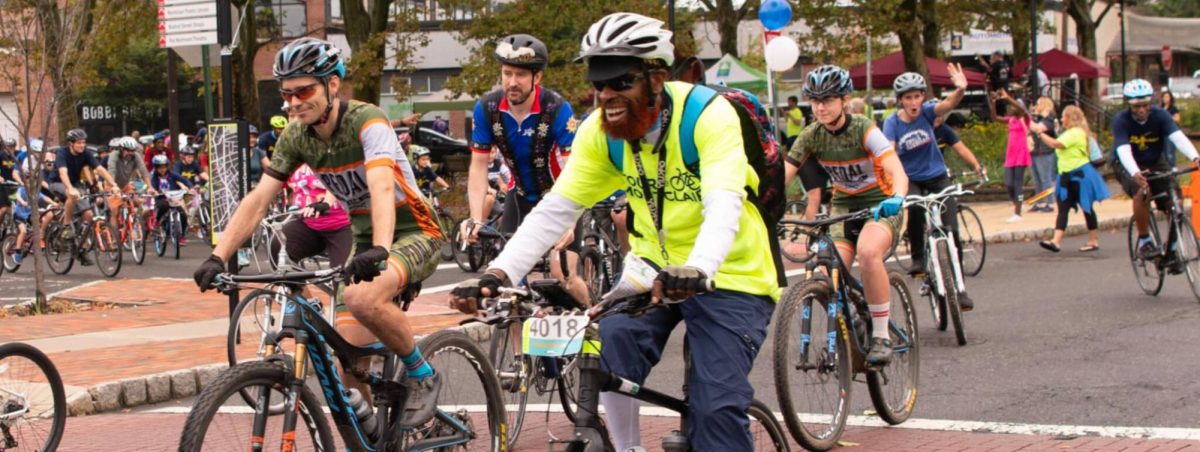
Essex County should be a place where cyclists and drivers coexist safely. It should be one of the best counties in New Jersey to bike. It has the bones of an old inner-ring suburb, the resources of a Tier 1 state, and a young, active population. Instead, it has become one of the most dangerous places to ride a bike in New Jersey, trailing only Camden County.
This failure is especially glaring because Essex County is not a rural highway network or an industrial trucking corridor. Yet cyclists are routinely funneled onto busy arterial roads with no protection, poor sightlines, and minimal enforcement. A few towns, like Montclair, have made marginal improvements, but the vast majority of the county remains openly hostile to biking. Municipalities talk endlessly about “studying” the issue and “improving safety,” while producing little more than vague plans and paint-on-the-road gestures that do nothing to protect lives.
County Executive Joseph DiVincenzo repeatedly promised transformative projects, most notably the Essex-Hudson Greenway. Years later, it remains largely unusable—still a dirt path beneath an abandoned bridge rather than a functioning transportation corridor. As a result, the only places where cyclists can ride with any sense of safety are county parks. Even those are difficult to reach without risking serious injury, because the roads leading to them are so poorly designed.
The reality is simple: the constant threat of being hit by a two-ton vehicle driven by a distracted motorist discourages people from biking at all. This is happening in a county that claims to prioritize safety and public health, despite cycling being one of the healthiest and most accessible forms of transportation. Bloomfield, the Oranges—particularly East and West Orange—Maplewood, Belleville, large parts of Montclair, Newark, and Irvington are all dominated by infrastructure that treats cyclists as an afterthought. Even short bike trips can be dangerous.
As an avid cyclist, I regularly bike to Watsessing Park. The distance is short, but the risk feels infinite. While the Glen Ridge portion of the trip is reasonably safe, the Bloomfield and East Orange sections are indefensible. Dodd Street and Watsessing Avenue have nonexistent shoulders, weak speed enforcement, poor visibility, and confusing or absent signage. This design routinely forces cyclists onto sidewalks, creating unnecessary and avoidable conflict with pedestrians. No one benefits from this arrangement, and it is unacceptable that Essex County continues to allow it.
Why, in the 21st century, are cyclists still not given dedicated lanes on major roads?
Dodd Street and Watsessing Avenue—and the towns they run through—see heavy vehicle and pedestrian traffic every day. Bloomfield and East Orange are densely populated and sit directly along the Garden State Parkway. Their businesses and amenities attract drivers passing through, increasing traffic volume even further. While this may be good for local economies, it is disastrous for cyclists.
There is a clear solution: establish car-free or car-light corridors in less-traveled districts. Pedestrian and bicycle-only streets are common across Europe and East Asia, and they work. They increase foot traffic for businesses, create safer public spaces, and eliminate the constant threat of reckless or impaired drivers. There is no legitimate reason these designs should be rare in American cities, especially in a county as dense and resource-rich as Essex.
The choice now lies with Essex County. Officials can continue to look the other way while cyclists are injured or killed, or they can take responsibility and mandate real bike infrastructure across municipalities. That action must come with a fixed timeline and enforceable standards—not another round of studies or symbolic gestures.
If the county fails to act, the outcome is predictable: more injuries, more fear, and more people forced off their bikes. Essex County can do better. The question is whether it is willing to.