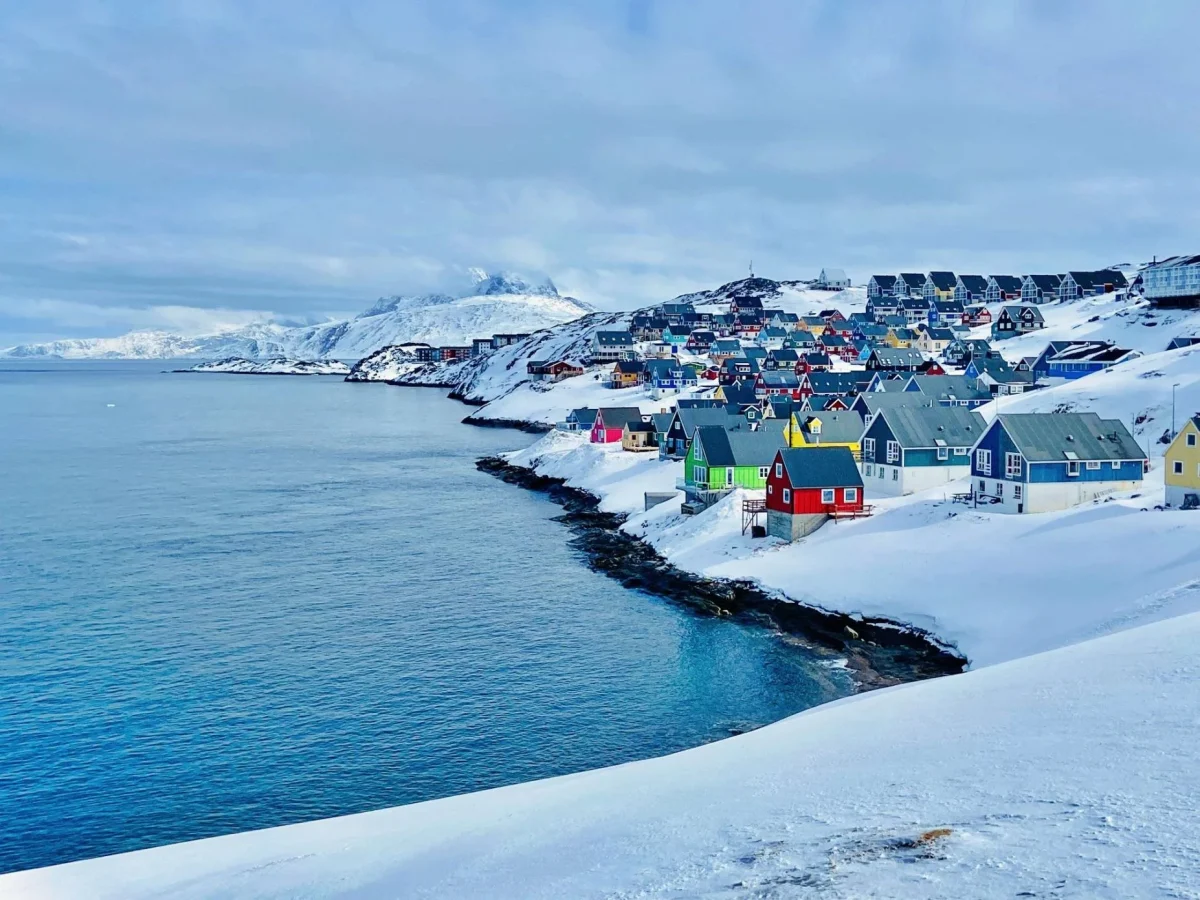
In recent years, Greenland (a semi-autonomous territory of Denmark situated between the Arctic and Atlantic Oceans) has become a surprising geopolitical target for the United States under the Trump Administration. The unusual proposal that catalyzed this tension has evolved into an amalgamation of strategic maneuvering and diplomatic difficulties, coupled with Arctic security concerns, which demonstrate global competition to influence the High North.
The main factor stoking the Trump Administration’s interest in Greenland is strategic importance. Greenland is centrally located as a gateway between North America, Europe, and the Arctic. Furthermore, climate change has opened new shipping routes and made resource extraction easier, driving up Greenland’s value on the geopolitical stage. The US also currently operates military installations on the island, such as the Pituffik Space Base (necessary for missile warning systems and space surveillance). Thus, Trump has been able to frame greater US control of Greenland as necessary to counter perceived Arctic threats from countries like Russia and China.
Trump’s public statements regarding Greenland have often been dramatic. In early 2025, he suggested that the U.S. would tariff or military pressure on Greenland to gain control if Denmark resisted efforts for closer alignment. Trump reportedly also stated that the US “will have everything we want” regarding rights and influence over Greenland’s bases. This comment blurred the boundaries between strategic access to Greenland and laying sovereignty claims on it, and drew extreme backlash from Danish and Greenlandic officials. A persistent idea linked to the Trump Administration has been the notion of the U.S. acquiring Greenland through either purchase or a form of realignment. In fact, after WWII, a similar offer was made by the US and rejected by Denmark. Trump recently revived interest in the idea during his first term, continuing to make comments that suggested Greenland “would be nice” to own. However, Greenland’s government has consistently reiterated that it is not for sale; territorial decisions should be made by Greenlandic people themselves. As talks of buying the island captured headlines, the Trump Administration has taken more concrete forms of action. For example, the Pentagon shifted towards realigning Greenland under US Northern Command rather than European Command, demonstrating Washington DC’s desire to treat the island as part of the North American defensive perimeter instead of an expansion of European NATO territory. This shift is also indicative of Greenland’s long-standing history in missile warning and Arctic defense.
Recently, Trump appointed Louisiana Governor Jeff Landry as the US Special Envoy to Greenland, signaling his priority on strengthening ties with the territory. However, this is a very unconventional way of achieving it, because Landry’s mission has focused much more on public engagement and advocacy in the US media rather than formal diplomatic relations with Greenland. Greenlandic officials have demonstrated caution, making sure to keep clear their sovereignty and cultural distinctiveness and resist outside pressures. There have also been significant international responses to the situation. Denmark, retaining authority over Greenland’s foreign affairs and defense, has insisted that the territory’s status cannot be altered without the consent and will of its people. Danish Prime Minister Mette Frederiksen and other officials have flatly rejected offers to sell or cede control, describing the notion as absurd or damaging to trust between allies. There has also been notable pushback from Greenland’s government. In early 2026, the territory declared its intention to bolster defense cooperation through NATO instead of entertaining unilateral changes proposed by the US. Greenlandic leaders also reaffirmed that decisions about security and sovereignty should be made multilaterally, with respect for international law. There are also broader global dynamics at play here, such as the melting Arctic ice opening up new possibilities for shipping, minerals, and strategic military positioning. Russia and China have increased activity and interest in the region as well, prompting the US and its European allies to reassess defenses and diplomatic engagement.
Greenland, having vast resources, perfect geographic positioning, and a small population, is at a very important intersection in the international context.