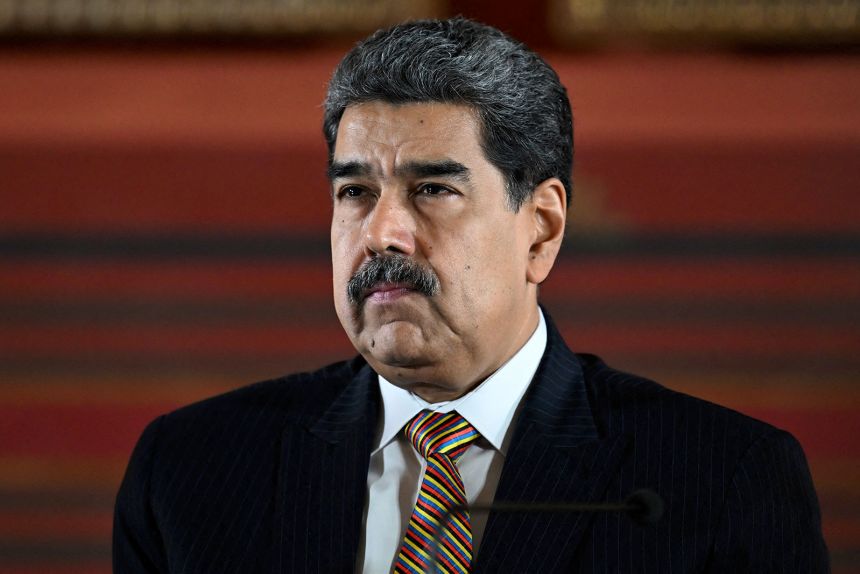
On January 3rd, 2026, at 2:01 a.m, the US Army’s Delta Force put the final piece in the puzzle of a months-premeditated operation — codenamed Absolute Resolve. The president of Venezuela, Nicolas Maduro, and his wife Cilia Flores were extracted from their compound in Caracas, Venezuela, and promptly flown to New York to face charges of narco-terrorism, conspiracy to import cocaine, and illegal weapons possession — to which he pleaded not guilty.
At face value, this abduction may seem seamless and justified, but residents of Caracas have experienced much more convoluted political tensions firsthand. Overnight, there were 7 explosions, and the morning streets were described as quiet. Protestors near the presidential palace pined for Maduro to be “brought back.” After being asked his thoughts on the situation, one Caracas resident said, “How do I feel? Scared like everyone. Venezuelans woke up scared; many families couldn’t sleep.” Another, in response to the US’s role in the situation, responded, “They [The US] impose the law. They are the world’s police. Assassin police. They are assassins.” Furthermore, Venezuela’s interior minister reported 100 people killed, and another 100 injured as a result of the US airstrikes that led to Maduro’s capture, citing casualties of even those completely unconcerned with the socialist revolution. To act as president, Venezuelan VP and Maduro loyalist Delcy Rodriguez was promptly sworn in and is still currently serving as the interim leader. Despite her affiliation with Maduro, President Trump has referred to Rodriguez as “a terrific person” after holding a “long call” with her.
Much debate has been sparked by the international nature of this abduction and whether international law may have been broken by the US in its capture of Maduro. Critics depict the act as a violation of state sovereignty as addressed in Article 2 of the UN Charter. Heads of state such as Maduro are usually granted some form of immunity if charged with a crime, but this idea is complicated by the nature of this capture being conducted in foreign soil. Republican Senator Mike Lee explains that “ ‘This action likely falls within the president’s inherent authority under Article II of the Constitution to protect US personnel from an actual or imminent attack…’ “, while the President rather ambiguously noted that the operation included “A lot of good planning and a lot of great, great troops and great people.”
According to the US, Maduro was being prosecuted for an outstanding arrest warrant for drug charges, a trade he has allegedly been active in since 1999. “Over the last decade, corrupt Venezuelan government officials have systematically looted Venezuela of billions of dollars,” said U.S. Attorney Ariana Fajardo Orshan. “Far too often, these corrupt officials and their co-conspirators have used South Florida banks and real estate to conceal and perpetuate their illegal activity.” Furthermore, it is interesting to note that Maduro will be prosecuted in the Southern District of New York. Due to the often extremely efficient prosecutors and tough judges in the southern district, the US government likely believes it has a strong case against Maduro that will hold despite these barriers. Other Latin American drug lords have been tried in this court before, including but not limited to Manuel Noriega in the 1980s.
As developments continue, there will certainly be further local, legal, and international implications to this conflict, which will have to be addressed by Trump, the US Government, and the acting leader of Venezuela alike. There are strong arguments for and against this act constituting a violation of international law, which are supplemented by questions regarding whether Trump still considers adherence to international law a strong priority for his administration at all. Thus, while Maduro’s crimes are almost certain, the legality of his extradition is far from it.