Honor was one of the most valuable commodities in c. 1300 BCE, so when the famous King Agamemnon faced an attack on his brother’s honor in the form of a stolen wife, there was one response available to him: war. Helen, who had been courted by the most renowned Greek men of the time, was held “captive” in the city of Troy by the prince Paris. Agamemnon called forth her previous suitors, powerful kings bound by an old oath, to retrieve her in his brother’s name, a ten-year conflict being the result.
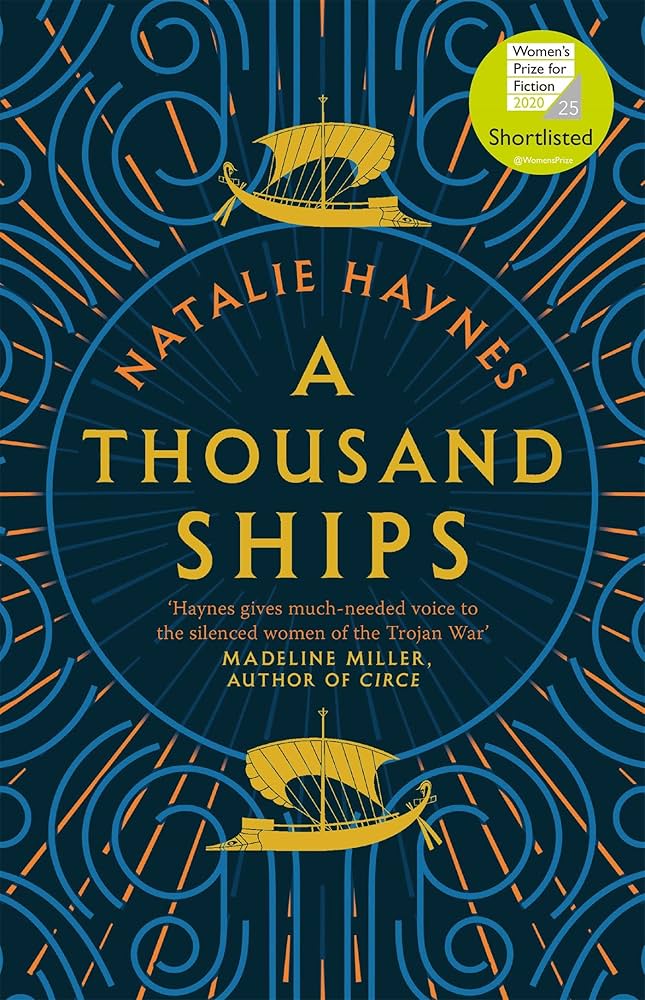
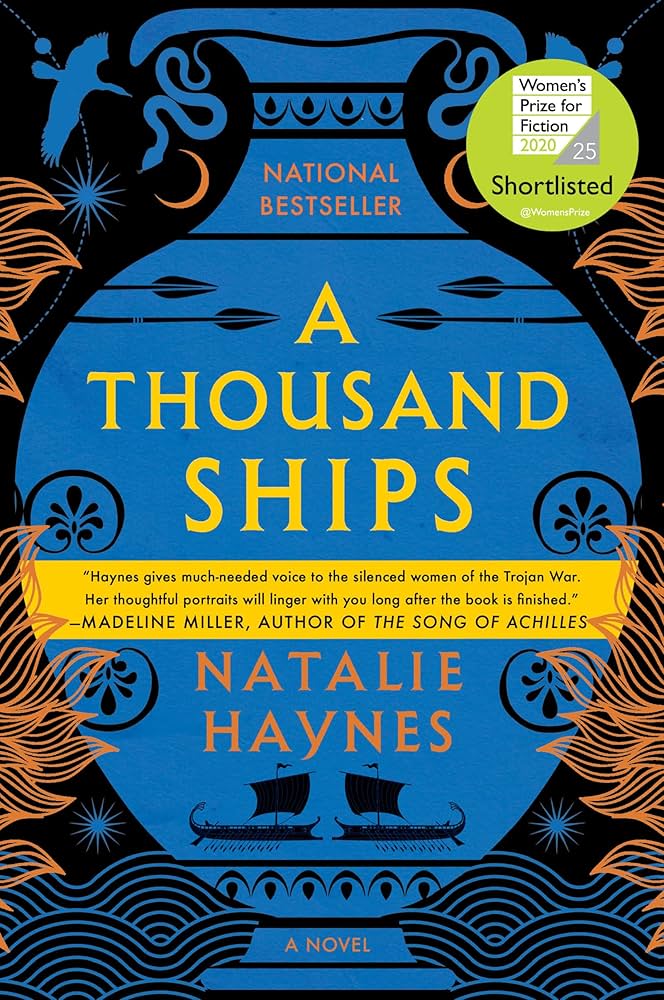
Natalie Haynes does not focus on those champions, nor does she pay attention to Helen’s plight. Haynes focuses on the women who witnessed and suffered through the events leading up to, during, and after the war. A Thousand Ships isn’t a retelling that further polishes the already blindingly bright murals and urns depicting the great deeds of men such as Odysseus or Ajax; A Thousand Ships dusts off the neglected and ignored stories of women affected just as much, or more.
From the perspective of various women, both obscure and well-known, Haynes’ novel is a multifaceted retelling of the Iliad. Calliope is arguably the dominant perspective, due to her ability to influence the nameless poet recounting the events from the women’s point of view. That said, there isn’t a main character per se: “this was never the story of one woman, or two. It was the story of all of them.” Views from both sides of the war are paid tribute, regardless of their origin; the common tie is the shared destruction of something dear to each of the women by this historic event.
Greek and Trojan women alike are separated from their families. Iphigenia is a prime example. A young girl tricked into believing she was to be married to Achilles, she is instead sacrificed to appease Artemis in recompense for her father’s folly. There is Briseis—a trophy of war captured from a nearby village, gifted to the very man who casually, almost carelessly, slaughtered her family as if he were harvesting grain. Finally, there is Andromache, who is forced to watch her spouse be picked apart slowly by a grieving, wounded man. Polyxena, Hecabe, Oenone, Laodomia, Creusa, Penelope…the list is endless.
Not only does this novel acknowledge the all-too-often overlooked stories of women, but it also shines a light on the ignobility of the tragedy that is war. There is no glory to be found. When you die, your eyes “cloud, like cataracts forming,” and you pass silently, without fanfare. War isn’t contained to the battlefield; it plucks just as easily on the life strings of those leagues across the sea—like Iphiginea—or behind the walls of the city—like poor Creusa—as it does on that of the soldiers. War isn’t a game or a product to be marketed, capitalized upon, or viewed as virtuous, but to be warned about as one of the follies of men.
I strongly recommend this book. While I may have found the plot to be somewhat meandering and the characters slightly repetitive, the book’s importance more than compensates for its inconsequential missteps; the lessons presented are timeless and incredibly relevant to modern tensions.