Extreme hardship strips people of everything, down to skin, bone, and faith. Yann Martel’s novel Life of Pi, based on Piscine Patel’s real-life experiences, embellishes on how faith is an aspect of human character that cannot be restricted. Martel follows Piscine, or “Pi’s,” 227-day-long experience alone in the Pacific Ocean and intrigues readers by exploring Pi’s character as an individual forced into “survival mode.” Not only does this novel display how Pi uses his personal ideologies to persevere, but it also inspires others to embrace their choice of beliefs when faced with an arduous journey.
Growing up in a zoo in Pondicherry, India, Pi acquired a comprehensive knowledge of animals and shares his beliefs contrary to typical opinions on zoos. Pi also develops an increasing interest in religion throughout his childhood. Despite being raised Hindu, Pi enthusiastically explores and even practices Christianity and Islam in secret. Eventually, word gets out; while his brother Ravi may poke fun at him for his interests, Pi enjoys attending several religious services and even asks for a prayer rug to practice at home.
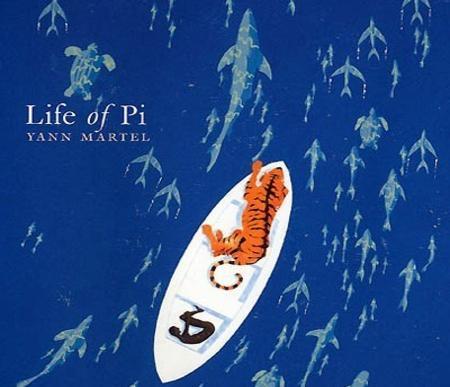
In February of 1976, changes in the government affected the politics of India, and as Pi reflects, “Bad politics is bad for business.” Thus, Pi’s family plans to move to Canada for the zoo’s economic prosperity. Shortly after setting sail on the massive Tsimtsum, a storm wipes out the ship—and almost everyone aboard—stranding four survivors on one lifeboat: Pi, a hyena, a zebra, an orangutan, and a 450-pound tiger named Richard Parker. From this point on, our protagonist would only see more pain enveloped in the Pacific Ocean.
One horrific part of Pi’s time in the Pacific is when the hyena kills both the zebra and the orangutan and even eats the zebra alive, followed by Richard Parker savagely biting the hyena in the neck. This traumatizing moment prefaces an upcoming period of fear and terror, prompting Pi to turn to the one controllable variable—faith. Likewise, Richard Parker serves as a fearful motivation, but also a dependable companion.
It is never confirmed if Richard Parker was a tiger present on the lifeboat for over 200 days, or if he was simply a figment of Pi’s imagination. While the survivor himself, Pisine Patel, chooses to tell the story with the tiger, readers can decide if they prefer a more realistic explanation. Regardless of which story readers choose to believe, Martel does a fantastic job of portraying Richard Parker’s varied existence as a symbol of faith. Similar to the tiger, religion cannot be definitively proved ‘right’ or ‘wrong,’ but is often what people undergoing hardship turn to; despite its realism, it proves to be a spiritual comfort.
Martel’s message of finding comfort in faith is relevant today. Muslims from Jordan, Saudi Arabia, Iran, and more have joined together in response to the severe drought. Time Magazine reports, “The warm weather and cloudless skies spurred worried Middle Easterners to turn to God for help.” People turn to God when Mother Nature turns against them.
Life of Pi is the kind of book that leaves readers pondering long after finishing it, because of its depth, meaning, and inspiration. Combining thought-provoking hardship with simple and assuring devotion, I felt emotionally and spiritually moved by this beautiful book.