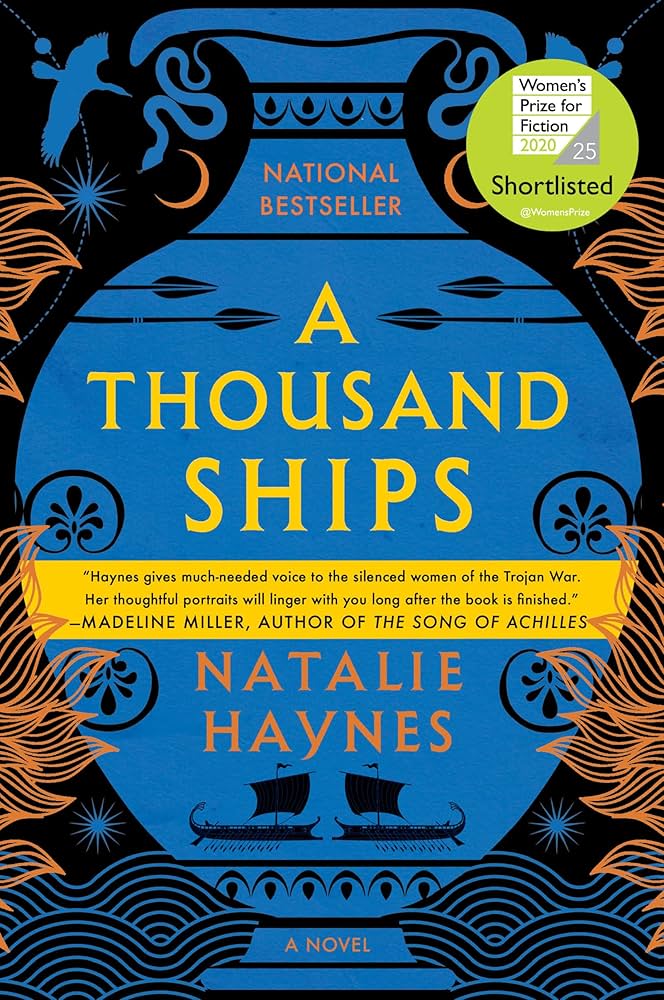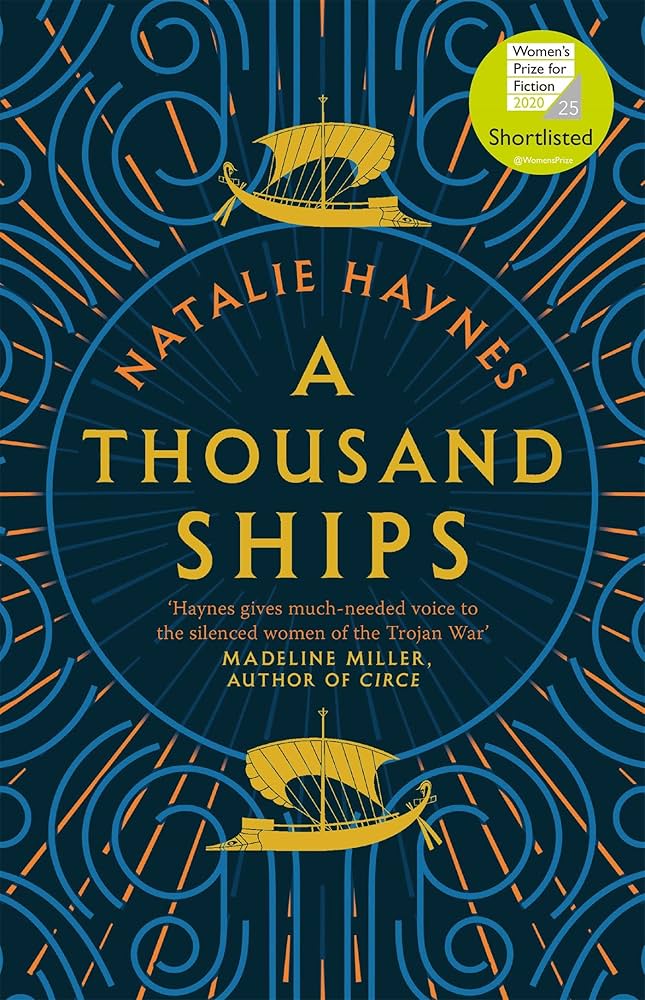
The Greek mythos is among the richest, longest-enduring, and most expansive mythologies that is still studied today, with many people still reading about the exploits of the Greek Gods and the mortals whose lives they always ruin. Given how many people still care deeply about the ancient stories told by poets and historians, it is no surprise that many modern authors write continuations or adaptations of the classic tales. From Rick Riordan’s popular young adult series, Percy Jackson and the Olympians, to Madeline Miller’s acclaimed romance, Song of Achilles, modern fiction is crawling with prominent novels based on the tales of Greek mythology. Among these tales, few are as iconic as the Trojan War story, which Natalie Haynes skillfully adapted in her feminist Iliad retelling, A Thousand Ships.
The story of the Trojan War is a simple one conceptually, and while each telling varies slightly from all others, the basic story is still always the same. It begins with Paris, a Trojan prince, kidnapping Helen of Troy, who is said to be the most beautiful woman in Greece. Helen’s husband, Menelaus, the king of Mycenaea, subsequently sends one-thousand ships in an effort to reclaim Helen, launching the 10-year war between Greece and Troy. Many hardships occur on both sides; epic heroes, such as Achilles, Ajax, and Hector, meet their deaths; and the prolonged siege of Troy only ends when Odysseus devises a skillful gambit of feigning retreat and using a wooden horse to infiltrate the city of Troy. In every retelling, the master mariner’s gambit is successful, and the city of Troy falls, with men being slaughtered and women and children being enslaved. A Thousand Ships retells this story, but from the perspective of the women involved.
The greatest strength of A Thousand Ships is, unsurprisingly, its use of perspective. How the novel uses small and emotional anecdotes to paint a bigger picture of the war’s whole story is remarkable, and provides an effective slow burn of piecing together the entire narrative. Each perspective, though longing to be fleshed out a bit more, still illustrates the brutality of war and how deeply the violence and brutality of both sides affected the women in the story. From the terrible anguish of deceased Iphigenia and her mother Clytemnestra, the grief felt by the widowed and sonless Hecabe, and the brutality of the death of Amazonian warrior Penthesilea, the terrors seen in each point of view are both enthralling and important, given the similarly destructive conflicts occurring in the modern day. Much like the modern wars in Ukraine and the Middle East, which that of Troy feels all too similar to, readers learn that, as the muse Calliope states, “In any war, the victors may be destroyed as completely as the vanquished.”
While A Thousand Ships has many strengths that all greatly contribute to the book’s quality, it also has a few issues that prevent me from calling it good. For one, most perspectives did not add much to differentiate the story from that of the original myth, ultimately muddying their effectiveness. Each one also failed to feel different from the next, with each segment having similar prose and feeling stale. Although the novel is incredibly important from both feminist and anti-war perspectives, these issues keep it from greatness in the end.